


Correcting the cause, not just the symptoms.
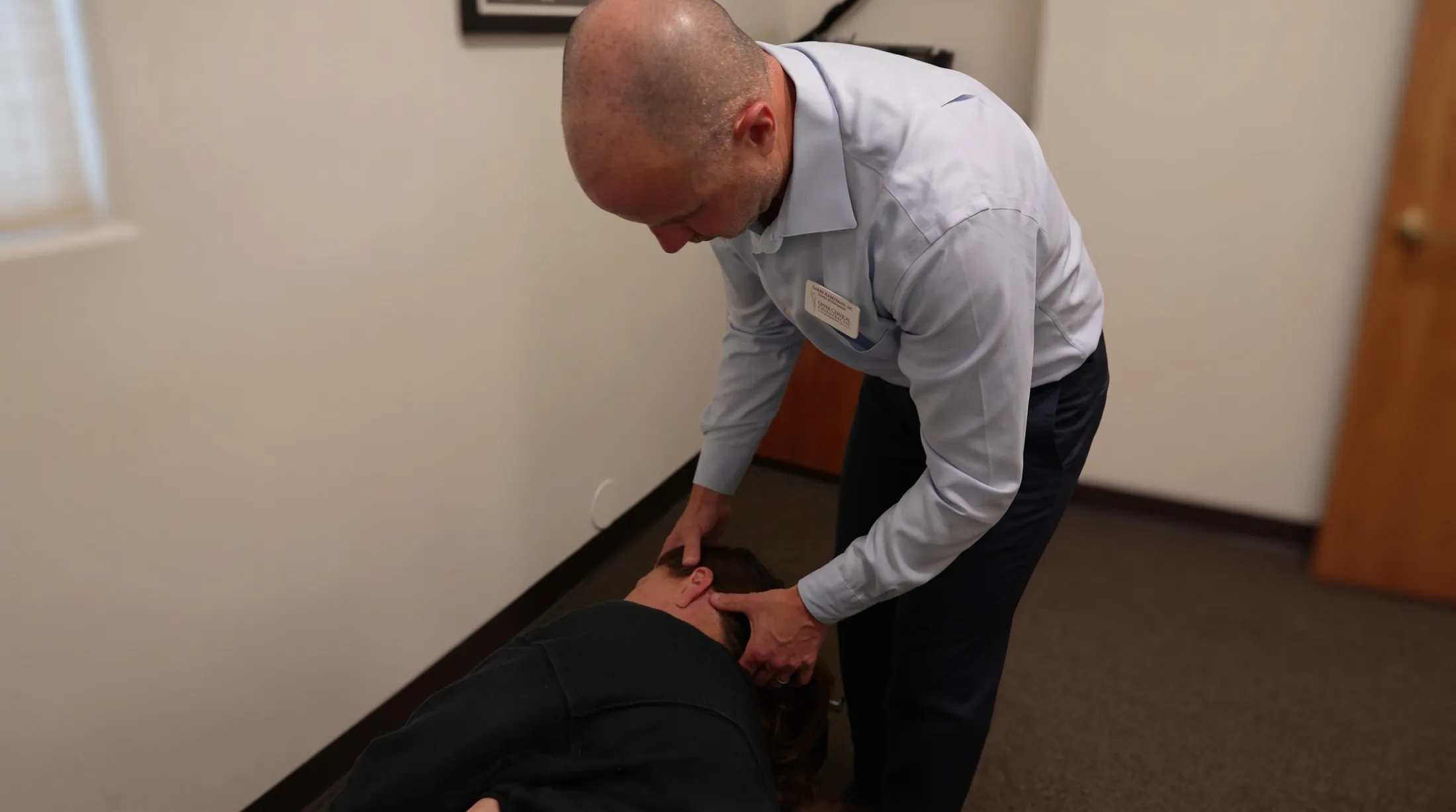
This painless technique restores the body to its proper position to relieve pressure on nerves and blood vessels that may be contributing to recurring migraines. It's gentle, and it doesn't require twisting or turning.
Our doctors use X-rays and advanced technology to take precise measurements of the misalignment, then provide a gentle spinal correction with minimal force. Patients with neurological conditions need exactly this kind of precise approach.
Upper cervical care for managing migraines
Migraines may be linked to trauma in the head and neck. These injuries often throw the head, neck and spine out of alignment. An upper cervical misalignment may block the flow of cerebrospinal fluid and irritate delicate nerves and blood vessels that affect the head, leading to migraines and headaches.
7 common migraine symptoms
Not everyone experiences the same symptoms during every episode, but these are common:
What are migraines?
A migraine is a neurological condition involving nerve pathways and chemicals that cause mild to severe pain, most often a throbbing, pulsating headache that comes in waves and can last hours, days or even weeks.
Tension migraines
Eyestrain, stress and hunger can lead to chronic pain that spreads to both sides of the head.
Sinus migraines
Caused by swelling in the sinus passages, often when you are sick or congested.
Cluster migraines
Excruciating headaches that typically occur consistently each day for months.